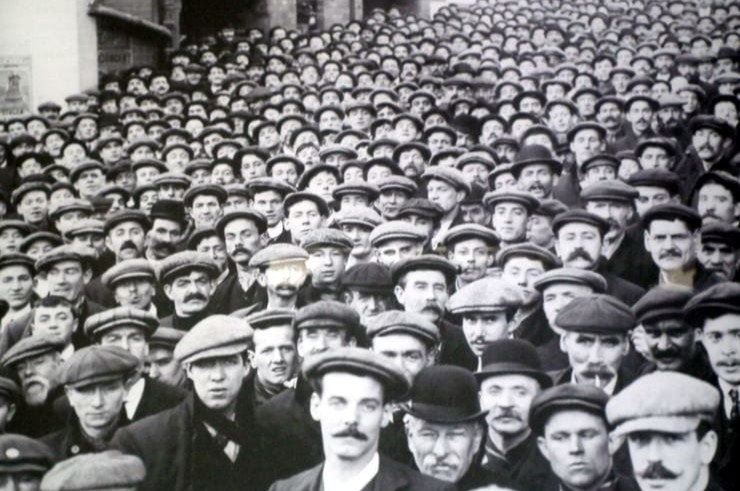
At the meeting on March 26th 2026 the talk was given by Andrew Reekes. Andrew offers a range of talks on various subjects. On this occasion, he gave a talk about The General Strike of 1926. This seemed appropriate, as it has been 100 years since it ended. The General Strike took place between May 3rd 1926 and May 12th 1926. There had been strikes pre1914, but worsening conditions in the mining industry led to further strikes in 1919 and 1921. Post WWI there was a surfeit of coal together with economic depression.
Gold Standard deepened depression
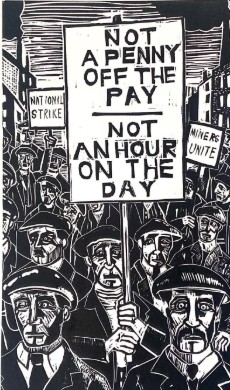
By 1925 the situation had become even worse. Churchill, as Chancellor of the Exchequer had reintroduced the Gold Standard, which caused British exports to become extremely expensive. International affairs caused further damage to the British coal market. German coal was permitted to be exported freely. In order to maintain profits, mine owners wanted to reduce miners’ wages and increase their working hours. The Miner’s Federation rejected these terms with the statement ‘Not a penny off the pay, not a minute on the day’. The prime minister, Stanley Baldwin offered a subsidy to the mining industry in order to maintain miners’ wages. He also commissioned a report by Sir Herbert Samuel, which would look into the problems in the mining industry. The report, however supported a reduction in miners’ wages and removal of the subsidy. The Miners’ Federation refused the wage reduction. Negotiations failed to reach an agreement and the TUC announced a General Strike. There was sympathy for the miners throughout the country.
The Unions Strike
Not all workers were unionised. Unionism was weak in the car industry and Herbert Austin actively rooted out shop stewards and agitators. Unionism was strong in the public sector, as Chamberlain had set up municipal organisations, which led to these workers becoming unionised. The TUC limited the strike to railwaymen, transport workers, dockers, ironworkers and steel workers. It was felt that an all-out strike would bring revolutionary elements to the fore.
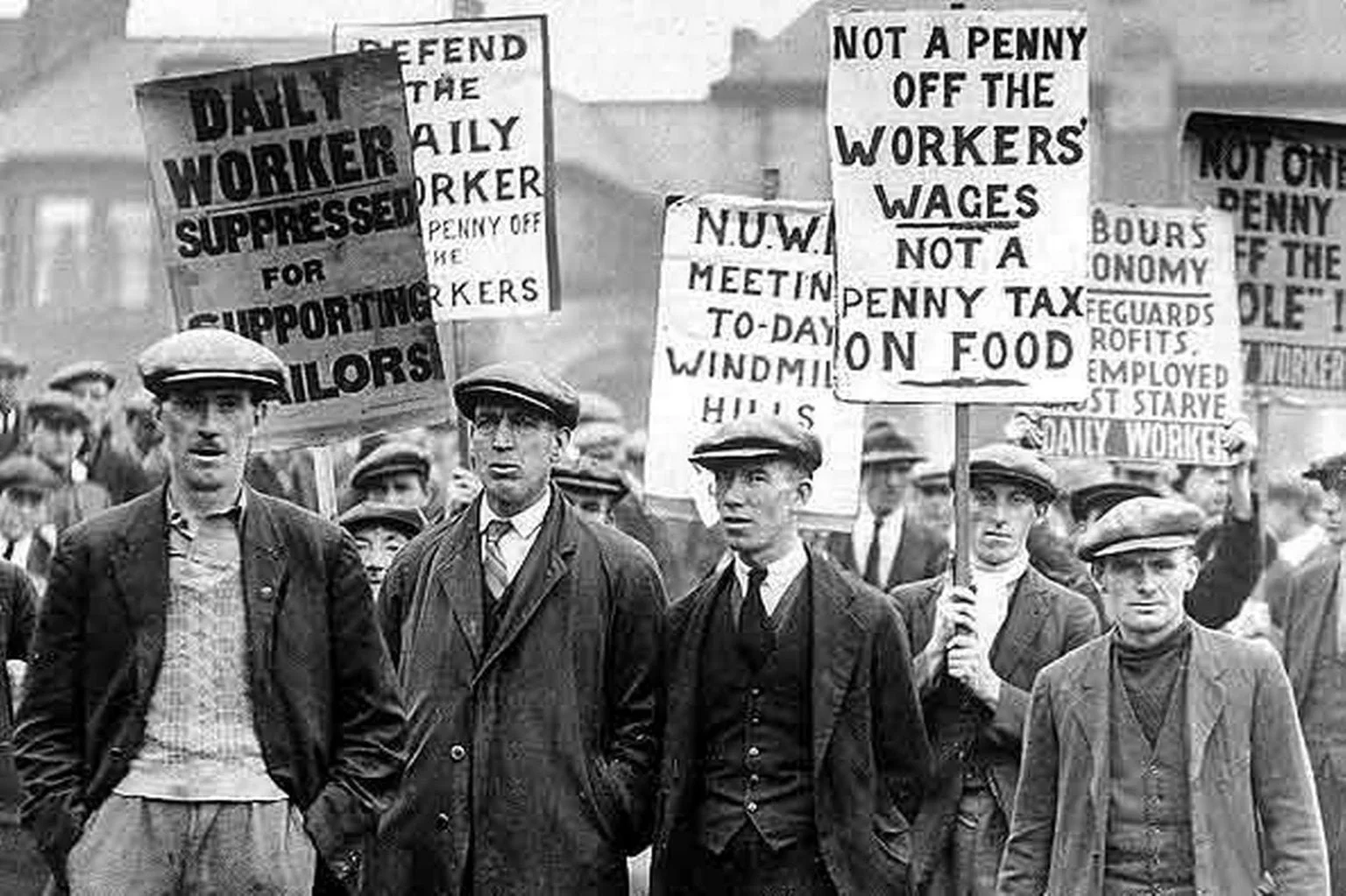
From the first day, all transport stopped, but apart from that, normal life for people was not affected. Those who wanted to work were helped to work, but seven buses which tried to run on Hagley Road were stopped by strikers in Bearwood. The Midland Red planned to run 30 – 40 buses and they were protected by a convoy of cars and Birmingham Police. A railway worker was arrested after calling the police a body of traitors. Churchill fought against the strikers and declared the strike illegal. The Labour party supported the strikers, which gave the party a boost.

On May 12th the TUC called off the strike, although the miners continued to strike for several months, but most could survive no longer and had to return to work. They were forced to accept lower wages and longer hours.
After the strike was called off, Birmingham employers acted vindictively towards strikers and many were sacked. The tramways department would no longer recognise the trade unions. The Trade Disputes Act of 1927 banned sympathetic strikes.
Rise of the Labour Party
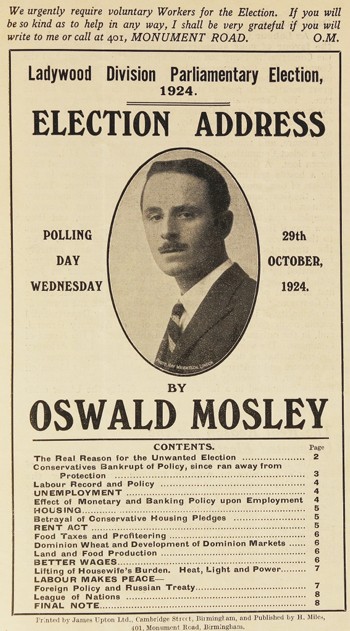
In the aftermath, the Labour Party was gaining popularity. In 1926 Oswald Mosley became a Labour MP in Smethwick after winning a by-election with a majority of 6582. His policies had brought hope to the masses. Mosley had contested Neville Chamberlain’s seat in Ladywood in 1924. It was a close run contest, but after three recounts, Chamberlain was found to have retained his seat with a majority of just 77 votes.
The success for the Labour Party continued in the next General Election in 1929, when six seats in Birmingham fell to Labour. This included the Birmingham West seat, which had been held by Sir Austen Chamberlain. He lost by 44 votes.
The General Strike, which had been called by the TUC was an attempt to prevent wage reductions and worsening conditions for coal miners. Despite 1.7 million workers striking, the strike was unsuccessful and had to be called off. The General Strike has not been considered a major turning point in British Industrial History and there have been no further General Strikes since.
- Aspects of the General Strike in Birmingham 1926, R. P. Hastings Pages 250-273 Published online: 18 Jul 2013
- The General Strike in Birmingham, Andrew Reekes
- The General Strike, Historic UK