Next Meeting of the Society

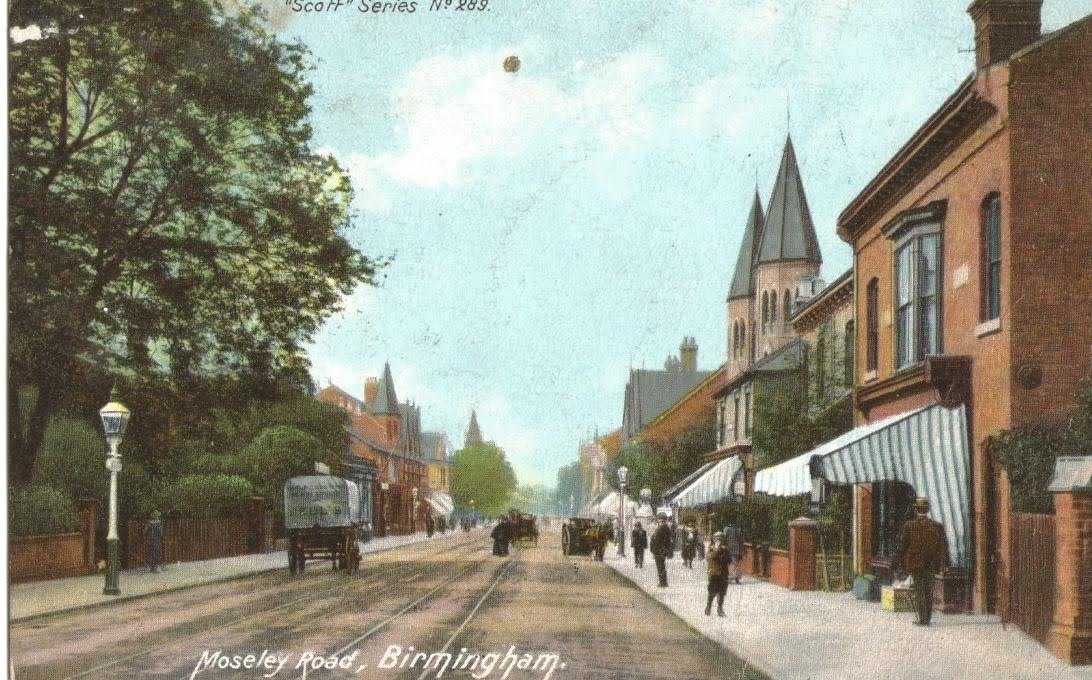
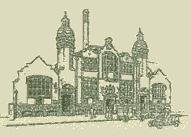
Thursday Jan 29th at 2 pm at the Creation Centre ( ex Tram Depot) on the Moseley Road.
Our speaker will be Liz Palmer, on the Whittall Street Explosion.
Pursall and Phillips was a percussion cap factory located at 22 Whittall St in the heart of Birmingham’s Gun Quarter. On the 27th of September 1859 a huge explosion tore through Pursall and Phillips factory resulting in the death of 20 employees.

Balsall Heath and the Holocaust

When we think of the Holocaust, our minds often travel to distant lands, barbed wire and Auschwitz.  The legacy of Genocides are in fact much closer, in the red-brick terraces of our neighbours.

Balsall Heath has been a “gateway” neighbourhood—a place defined by migration, from the Irish and Jewish communities in the early 20th century to ‘Commonwealth citizens’ arriving in the 50s, and more people through to present day.  The Jewish community in Birmingham was initially concentrated around inner-city areas like Hurst Street and Holloway Head before spreading into Moseley, Edgbaston and Balsall Heath.

Candles lit by Woodcraft Folk in Birmingham for Holocaust Memorial Day
Candles lit by Woodcraft Folk in Birmingham for Holocaust Memorial Day 2026

A Sanctuary in the Second City

In the late 1930s, as the shadow of the Nazi regime stretched across Europe, the Kindertransport began bringing thousands of Jewish children to Britain, many finding their way to the West Midlands.

Local Quaker groups and civic organizations like Woodcraft Folk were instrumental in finding “host homes” for children of desperate families fleeing persecution.

Following the liberation of Death Camps in 1945, many survivors came to the UK, some eventually settling in Balsall Heath, drawn by the affordable housing and welcoming community.

Sir Ludwig Guttmann, Holocaust survivor, initially moved to Balsall Heath, then Oxford, started the competition that led to birth of the Paralympic Games
Sir Ludwig Guttmann, Holocaust survivor, initially moved to Balsall Heath, then to Oxford, started the competition that led to birth of the Paralympic Games

Why This History Matters Today

The main hub for the Orthodox Jewish community in the area is now the Birmingham Central United Synagogue, which is located near Balsall Heath (at 4 Speedwell Rd, Birmingham B5 7PR).

The former synagogue building in October 2023, during its demolition

Today on Holocaust Memorial Day we remember the people who died in Death Camps in the 1940s, as well as countless millions who still die in Genocides across the world.  It is also important to remember the difference we can and have made, not least, the residents of Birmingham who opened their doors in 1939 making a choice that saved lives.

“To forget a Holocaust is to kill twice.”
Elie Wiesel, Holocaust survivor

Birmingham Central United Synagogue
Birmingham Central United Synagogue, rebuilt

Read the story of Kitty Hart-Moxon, Birmingham Holocaust survivor.  She celebrated her 99th birthday on December 1, 2025.

Bertha Bracey Plaque in Bournville

Also see Bertha Bracey, quaker refugee aid worker and on of the founders of Kindertransport.


Why we’re celebrating 750 years of history

Balsall Heath is 750 years old, and the evidence takes us right back to Edward 1st ‘Longshanks’ or  ‘Hammer of the Scots’.

The Earliest Record: 1275

The earliest documented mention shows he original spelling was Bordeshale (Later contracted to the familiar ‘Balsall’). This places the area’s first official record early in King Edward I’s reign.

Copy of the written document, the Lay Subsidy Roll, which lists 'Roberto de Bordeshale, living in the Royal Manor of Bromsgrove and Norton in Worcester'
Copy of the written document, the Lay Subsidy Roll, which lists ‘Roberto de Bordeshale, living in the Royal Manor of Bromsgrove and Norton in Worcester’

Bromsgrove and King’s Norton were Royal manors held ‘in ancient demesne’ by the king. 

What Happened in 1275?

The official documentation was a direct result of the King’s efforts to modernize and tax people, passing laws to bring order and better admin.  A key piece of legislation was the first Statute of Westminster. This law included new rules for taxes and land ownership.  Before 1275 boundaries and ownership could be proven with simple oral evidence, but the new laws demanded that everything be formally recorded.  A drive for better governance and tax collection that “Bordeshale” was officially put on the map!

Copy of image introducing  'The Statute of Westminster'
Thanks Ian, image in Article, ‘Time Immemorial’ https://www.ianvisits.co.uk/

Defining the Boundary

Long before it became an inner-city suburb, the area now known as Balsall Heath was defined by natural boundaries.  The boundary of the historic Kings Norton manor was marked by the Bodesehale Brook.  This brook ran roughly parallel to the present-day Belgrave Road before flowing into the River Rea.

This ancient line was so significant it was still used centuries later. In 1796, the brook was clearly marked on a Gooch estate map as the dividing line between Kings Norton parish in Worcestershire and Aston parish in Warwickshire:

Gooch estate sketch map from 1796 in John Morris-Jones in “Bygone Balsall Heath’ 1979

What was Balsall Heath Like in 1275?

While the area was officially recorded, it wasn’t a town. Life in 1275 Balsall Heath was rooted in the landscape:

A watermill was certainly operating nearby, near what is now Cannon Hill Park, with records dating back even earlier to 1231.  Farms likely dotted the fertile land along the Rea Valley.

The Heath. The higher ground was dominated by open heathland, which lay along the ancient ridgeway track—the same route that eventually developed into the Moseley Road.

So, when we celebrate 750 years, we’re celebrating its official birth, connecting our modern community back to the medieval landscape of Bordeshale!

Changing Times at Second Saturday

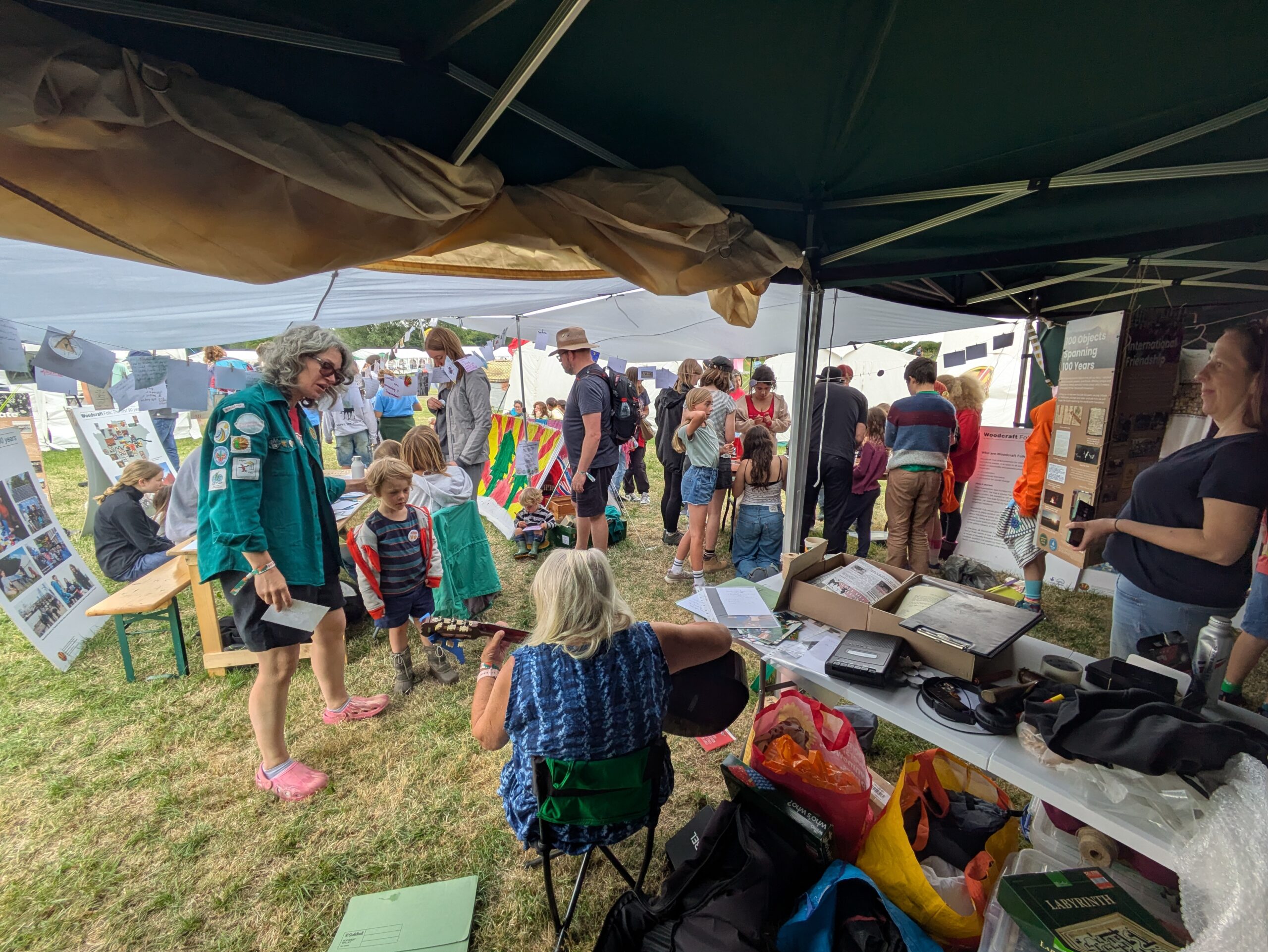
Seond Saturday is monthly mini-festival celebrating making, creativity, community, and local culture, it’s no surprise to see us there, and we will be every month with ‘Changing Times’.   Our project, ‘Changing Times in Balsall Heath,’ is about our community—what’s happening, what’s important, and what voices need to be heard.

At Second Saturday, we’ll be there to chat with people about their lives and experiences in Balsall Heath.  We want to explore ideas and how we can include more people in the ‘Changing Times’ project – Your stories, memories, and hopes!

Second Saturdays, something to celebrate!

8th November featured pottery, woodwork, repair cafe, a cafe, bookbinding, the thoughtful womxn’s Journey workshop, a Market and our Changing Times display and loads more.  Next Second Saturday, 13th December, we’ll be celebrating 750 years of Balsall Heath!

Mark your calendars for Saturday 13th December and come find our ‘Changing Times in Balsall Heath’ team at the Old Print Works. Let’s make, connect, and celebrate our wonderful local culture together!

Contact Marcus@Balsallheathhistory.co.uk   07511 482528

750th Birthday party Flyer

EXCITING NEWS! A NEW PROJECT!

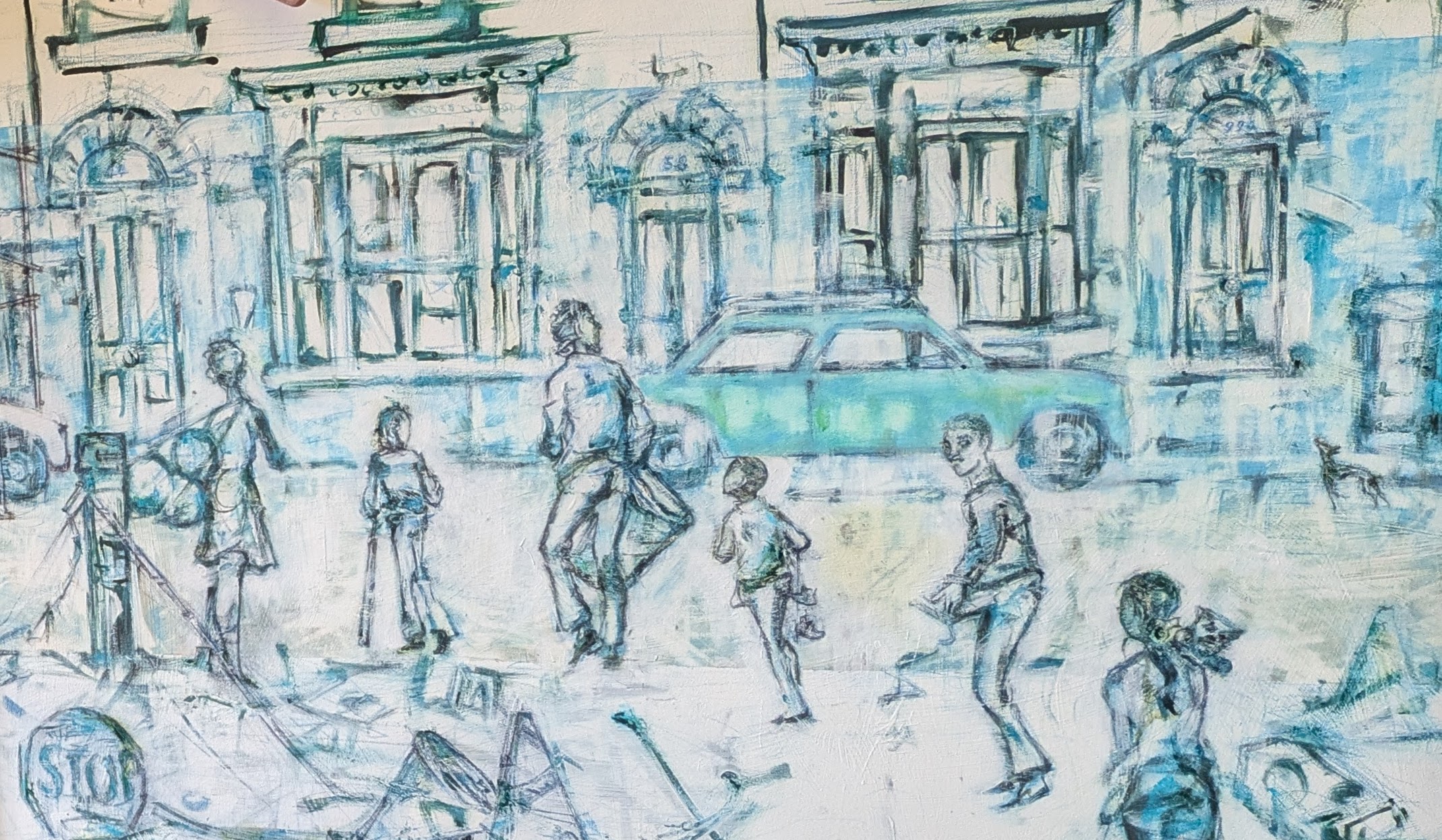
“ Balsall Heath in Changing Times 1960s to 1990s”

The Project aims to record and preserve memories from people of diverse backgrounds, linking these with the Mick Turner Archive of photographic images. This composite picture will be shown in an Exhibition, touring displays, a published booklet, and a 10 minute film, as well as online on our website, Facebook pages and Youtube

The years 1960 to the 1990s saw significant transformation of the physical environment as well as a radically changed demographic. Many migrants moved in to the area, and some long established residents were compulsorily rehoused elsewhere as whole streets were demolished. Meanwhile the area was in decline with uncleared bomb sites from the Second World War, poor housing, high unemployment, appalling health statistics, poverty and a major prostitution problem.
However, this was also a time of new opportunities, new organisations and new ideas. There was growing dynamism and hope as the groundwork was laid for the thriving multi-cultural community of today’s Balsall Heath.

November Meeting of the Society

The next meeting will be held on Thursday November 27th at 2 pm at The Creation Centre ( old Tram Depot), 582, Moseley Road, B12 9AA

The speaker will be Betty Hagglund, talking about Mary and Martha Russell, daughters of William Russsell, who was Unitarian and close friend of Joseph Priestley.
The two women grew up at Showell Green House but this was destroyed by rioters in the 1791 riots, after which the family fled to America.

Welcome

Over the last 40 years the Society has grown from strength to strength. We have a fascinating range of publications, some interesting projects and active participation in local events

We are now based in The Old Print Works, in the eighteenth century house which fronts on to the Moseley Road, and next to the  Gap Café. Our base is right next to the lovely gallery space at the Works, which is ideal for exhibitions.

Our address is:
Balsall Heath Local History Society
The Old Print Works,
498-506 Moseley Road,
Balsall Heath.
Birmingham B12 9AH

info@balsallheathhistory.co.uk
Phone number for the office. 07565 194822
or phone Val Hart:07776899352

Facebook: Balsall Heath Local History Society


Balsall Heath. A History

“Balsall Heath, a History” by Val Hart was first published in 1992. It had many reprintings but has been out-of-print for some time. This is a revised and updated edition.

The price is £10.95 plus £2.30 postage to UK.  So a total of  £13.25. Please pay through the Donate button  below, after the info about our meetings and pffice base.

&nbsp

You can find us on Facebook at Balsall Heath Local History Society